Seznamy Atom Economy Formula A Level Zdarma
Seznamy Atom Economy Formula A Level Zdarma. % of atom economy = mr of useful products x100 total mr of all products mass of desired useful product atom economy = 100 x to work out the amount of starting materials that and up turning into useful products is called atom … 26/7/2020 · the percentage atom economy of a reaction is calculated using this equation: % atom economy = (4 / 36) * 100 = 11.1%. 26/7/2020 · atom economy = \(\frac{{total~m_{r}~of~the~desired~product}}{{total~m_{r}~of~all~reactants}}\times100\) atom economy = \(\frac{\textup{(2\times46)}}{\textup{180}} \times 100\) atom economy = 51.1%.

Nejlepší Higher Chemistry The Chemistry Of Making Money Challenge Ppt Download
26/7/2020 · atom economy = \(\frac{{total~m_{r}~of~the~desired~product}}{{total~m_{r}~of~all~reactants}}\times100\) atom economy = \(\frac{\textup{(2\times46)}}{\textup{180}} \times 100\) atom economy = 51.1%. % atom economy = (4 / 36) * 100 = 11.1%. The atom economy (atom utilisation) of a chemical reaction is a measure of the percentage of the starting materials that actually end up in useful products *.8/1/2018 · the desired product is hydrogen and the mass produced in the reaction = 4g.
Inefficient, wasteful processes have low atom economies. Atom economy is the molecular mass of the desired product ÷ the sum of molecular masses of all the products × 100. The percentage atom economy of a reaction is calculated using the balanced equation for the reaction as follows: Efficient processes have high atom economies, and are important for sustainable development, as they use fewer natural resources and create less waste. Between the steam reforming reaction and the. The atom economy could also be calculated using mass, instead or mr in this case, you would divide the mass of the desired product formed by the total mass of …

The atom economy of a chemical reaction is a measure of the amount of starting materials that become useful products. Students could be asked to identify the useful product Reactants desired product + waste products the atom economy can be calculated in either of two ways: It is important for sustainable development and for economic reasons to use reactions with high atom economy. 26/7/2020 · atom economy = \(\frac{{total~m_{r}~of~the~desired~product}}{{total~m_{r}~of~all~reactants}}\times100\) atom economy = \(\frac{\textup{(2\times46)}}{\textup{180}} \times 100\) atom economy = 51.1%. The atom economy (atom utilisation) of a chemical reaction is a measure of the percentage of the starting materials that actually end up in useful products *. Then, we calculate % atom economy: Students should be able to: Inefficient, wasteful processes have low atom economies. Between the steam reforming reaction and the. The atom economy could also be calculated using mass, instead or mr in this case, you would divide the mass of the desired product formed by the total mass of … Inefficient, wasteful processes have low atom economies.

For the general chemical reaction: % atom economy = (4 / 36) * 100 = 11.1%. Atom economy is the molecular mass of the desired product ÷ the sum of molecular masses of all the products × 100. Between the steam reforming reaction and the. Calculate the atom economy of a reaction to form a desired product … A) atom economy = 28/142 = 20% b) atom economy = 142/142 = 100% c) if only one product can be sold then the rest is wasted; The atom economy of a chemical reaction is a measure of the amount of starting materials that become useful products. 8/11/2021 · the formula to calculate atom economy can be written in several different ways and they are all equivalent to each other because of the law of conservation of mass e.g. The atom economy (atom utilisation) of a chemical reaction is a measure of the percentage of the starting materials that actually end up in useful products *. Reactants desired product + waste products the atom economy can be calculated in either of two ways:.. The atom economy of a chemical reaction is a measure of the amount of starting materials that become useful products.

% of atom economy = mr of useful products x100 total mr of all products mass of desired useful product atom economy = 100 x to work out the amount of starting materials that and up turning into useful products is called atom …. The percentage atom economy of a reaction is calculated using the balanced equation for the reaction as follows: It is important for sustainable development and for economic reasons to use reactions with high atom economy. 26/7/2020 · the percentage atom economy of a reaction is calculated using this equation: (relative formula mass of desired product / relative formula mass of all reactants) x 100; If both can be sold then there is no waste product and the atom economy is greater. 8/11/2021 · the formula to calculate atom economy can be written in several different ways and they are all equivalent to each other because of the law of conservation of mass e.g. A) atom economy = 100% b) the reversible reaction symbol ( ) suggests that the reaction is unlikely to have a very high yield. For the general chemical reaction: Inefficient, wasteful processes have low atom economies. Students could be asked to identify the useful product.. Atom economy is the molecular mass of the desired product ÷ the sum of molecular masses of all the products × 100.

The percentage atom economy of a reaction is calculated using the balanced equation for the reaction as follows: . 26/7/2020 · the percentage atom economy of a reaction is calculated using this equation:
(relative formula mass of desired product / relative formula mass of all reactants) x 100; The percentage atom economy of a reaction is calculated using the balanced equation for the reaction as follows: A) atom economy = 100% b) the reversible reaction symbol ( ) suggests that the reaction is unlikely to have a very high yield. For the general chemical reaction: 8/11/2021 · the formula to calculate atom economy can be written in several different ways and they are all equivalent to each other because of the law of conservation of mass e.g... If both can be sold then there is no waste product and the atom economy is greater.

(relative formula mass of desired product / relative formula mass of all reactants) x 100;. % atom economy = (4 / 36) * 100 = 11.1%. Then, we calculate % atom economy: The atom economy could also be calculated using mass, instead or mr in this case, you would divide the mass of the desired product formed by the total mass of … Students could be asked to identify the useful product % of atom economy = mr of useful products x100 total mr of all products mass of desired useful product atom economy = 100 x to work out the amount of starting materials that and up turning into useful products is called atom … Between the steam reforming reaction and the. (relative formula mass of desired product / relative formula mass of all reactants) x 100; 26/7/2020 · the percentage atom economy of a reaction is calculated using this equation:.. 26/7/2020 · the percentage atom economy of a reaction is calculated using this equation:

Between the steam reforming reaction and the. The atom economy (atom utilisation) of a chemical reaction is a measure of the percentage of the starting materials that actually end up in useful products *. % atom economy = (4 / 36) * 100 = 11.1%. Calculate the atom economy of a reaction to form a desired product … 26/7/2020 · atom economy = \(\frac{{total~m_{r}~of~the~desired~product}}{{total~m_{r}~of~all~reactants}}\times100\) atom economy = \(\frac{\textup{(2\times46)}}{\textup{180}} \times 100\) atom economy = 51.1%. The percentage atom economy of a reaction is calculated using the balanced equation for the reaction as follows: (relative formula mass of desired product / relative formula mass of all reactants) x 100; Efficient processes have high atom economies, and are important for sustainable development, as they use fewer natural resources and create less waste. Atom economy is the molecular mass of the desired product ÷ the sum of molecular masses of all the products × 100. Inefficient, wasteful processes have low atom economies. The atom economy could also be calculated using mass, instead or mr in this case, you would divide the mass of the desired product formed by the total mass of ….. The percentage atom economy of a reaction is calculated using the balanced equation for the reaction as follows:

8/11/2021 · the formula to calculate atom economy can be written in several different ways and they are all equivalent to each other because of the law of conservation of mass e.g. The percentage atom economy of a reaction is calculated using the balanced equation for the reaction as follows: The atom economy (atom utilisation) of a chemical reaction is a measure of the percentage of the starting materials that actually end up in useful products *. % atom economy = (4 / 36) * 100 = 11.1%. The atom economy of a chemical reaction is a measure of the amount of starting materials that become useful products. 26/7/2020 · the percentage atom economy of a reaction is calculated using this equation:

Reactants desired product + waste products the atom economy can be calculated in either of two ways: It is important for sustainable development and for economic reasons to use reactions with high atom economy. For the general chemical reaction: 8/11/2021 · the formula to calculate atom economy can be written in several different ways and they are all equivalent to each other because of the law of conservation of mass e.g. 8/1/2018 · the desired product is hydrogen and the mass produced in the reaction = 4g. Students could be asked to identify the useful product Reactants desired product + waste products the atom economy can be calculated in either of two ways: (relative formula mass of desired product / relative formula mass of all reactants) x 100; 26/7/2020 · atom economy = \(\frac{{total~m_{r}~of~the~desired~product}}{{total~m_{r}~of~all~reactants}}\times100\) atom economy = \(\frac{\textup{(2\times46)}}{\textup{180}} \times 100\) atom economy = 51.1%. Then, we calculate % atom economy: Efficient processes have high atom economies, and are important for sustainable development, as they use fewer natural resources and create less waste.. It is important for sustainable development and for economic reasons to use reactions with high atom economy.

(relative formula mass of desired product / relative formula mass of all reactants) x 100;. If both can be sold then there is no waste product and the atom economy is greater. Inefficient, wasteful processes have low atom economies. Atom economy is the molecular mass of the desired product ÷ the sum of molecular masses of all the products × 100. (relative formula mass of desired product / relative formula mass of all reactants) x 100; The atom economy of a chemical reaction is a measure of the amount of starting materials that become useful products. 26/7/2020 · atom economy = \(\frac{{total~m_{r}~of~the~desired~product}}{{total~m_{r}~of~all~reactants}}\times100\) atom economy = \(\frac{\textup{(2\times46)}}{\textup{180}} \times 100\) atom economy = 51.1%. A) atom economy = 100% b) the reversible reaction symbol ( ) suggests that the reaction is unlikely to have a very high yield. 26/7/2020 · the percentage atom economy of a reaction is calculated using this equation: A) atom economy = 28/142 = 20% b) atom economy = 142/142 = 100% c) if only one product can be sold then the rest is wasted; 8/11/2021 · the formula to calculate atom economy can be written in several different ways and they are all equivalent to each other because of the law of conservation of mass e.g.. A) atom economy = 100% b) the reversible reaction symbol ( ) suggests that the reaction is unlikely to have a very high yield.

% atom economy = (4 / 36) * 100 = 11.1%. Then, we calculate % atom economy: Inefficient, wasteful processes have low atom economies. Reactants desired product + waste products the atom economy can be calculated in either of two ways: Calculate the atom economy of a reaction to form a desired product … It is important for sustainable development and for economic reasons to use reactions with high atom economy. % atom economy = (4 / 36) * 100 = 11.1%. Atom economy is the molecular mass of the desired product ÷ the sum of molecular masses of all the products × 100. (relative formula mass of desired product / relative formula mass of all reactants) x 100; A) atom economy = 28/142 = 20% b) atom economy = 142/142 = 100% c) if only one product can be sold then the rest is wasted;.. The atom economy (atom utilisation) of a chemical reaction is a measure of the percentage of the starting materials that actually end up in useful products *.

Reactants desired product + waste products the atom economy can be calculated in either of two ways: The atom economy of a chemical reaction is a measure of the amount of starting materials that become useful products. Reactants desired product + waste products the atom economy can be calculated in either of two ways: For the general chemical reaction: (relative formula mass of desired product / relative formula mass of all reactants) x 100; 8/11/2021 · the formula to calculate atom economy can be written in several different ways and they are all equivalent to each other because of the law of conservation of mass e.g. Students should be able to:. % of atom economy = mr of useful products x100 total mr of all products mass of desired useful product atom economy = 100 x to work out the amount of starting materials that and up turning into useful products is called atom …
The percentage atom economy of a reaction is calculated using the balanced equation for the reaction as follows:. Calculate the atom economy of a reaction to form a desired product … Inefficient, wasteful processes have low atom economies. 26/7/2020 · atom economy = \(\frac{{total~m_{r}~of~the~desired~product}}{{total~m_{r}~of~all~reactants}}\times100\) atom economy = \(\frac{\textup{(2\times46)}}{\textup{180}} \times 100\) atom economy = 51.1%.. Between the steam reforming reaction and the.

Students could be asked to identify the useful product. If both can be sold then there is no waste product and the atom economy is greater. Then, we calculate % atom economy: The atom economy could also be calculated using mass, instead or mr in this case, you would divide the mass of the desired product formed by the total mass of … The atom economy of a chemical reaction is a measure of the amount of starting materials that become useful products. Inefficient, wasteful processes have low atom economies. Between the steam reforming reaction and the. 26/7/2020 · atom economy = \(\frac{{total~m_{r}~of~the~desired~product}}{{total~m_{r}~of~all~reactants}}\times100\) atom economy = \(\frac{\textup{(2\times46)}}{\textup{180}} \times 100\) atom economy = 51.1%. For the general chemical reaction:.. Between the steam reforming reaction and the.

% of atom economy = mr of useful products x100 total mr of all products mass of desired useful product atom economy = 100 x to work out the amount of starting materials that and up turning into useful products is called atom … Atom economy is the molecular mass of the desired product ÷ the sum of molecular masses of all the products × 100. The atom economy could also be calculated using mass, instead or mr in this case, you would divide the mass of the desired product formed by the total mass of … Inefficient, wasteful processes have low atom economies. Between the steam reforming reaction and the. (relative formula mass of desired product / relative formula mass of all reactants) x 100; Reactants desired product + waste products the atom economy can be calculated in either of two ways: 26/7/2020 · atom economy = \(\frac{{total~m_{r}~of~the~desired~product}}{{total~m_{r}~of~all~reactants}}\times100\) atom economy = \(\frac{\textup{(2\times46)}}{\textup{180}} \times 100\) atom economy = 51.1%.

8/1/2018 · the desired product is hydrogen and the mass produced in the reaction = 4g.. Inefficient, wasteful processes have low atom economies. A) atom economy = 100% b) the reversible reaction symbol ( ) suggests that the reaction is unlikely to have a very high yield. A) atom economy = 28/142 = 20% b) atom economy = 142/142 = 100% c) if only one product can be sold then the rest is wasted; The atom economy (atom utilisation) of a chemical reaction is a measure of the percentage of the starting materials that actually end up in useful products *.

8/1/2018 · the desired product is hydrogen and the mass produced in the reaction = 4g.. % of atom economy = mr of useful products x100 total mr of all products mass of desired useful product atom economy = 100 x to work out the amount of starting materials that and up turning into useful products is called atom … 8/1/2018 · the desired product is hydrogen and the mass produced in the reaction = 4g. Then, we calculate % atom economy: % of atom economy = mr of useful products x100 total mr of all products mass of desired useful product atom economy = 100 x to work out the amount of starting materials that and up turning into useful products is called atom …

8/1/2018 · the desired product is hydrogen and the mass produced in the reaction = 4g.. Atom economy is the molecular mass of the desired product ÷ the sum of molecular masses of all the products × 100. Reactants desired product + waste products the atom economy can be calculated in either of two ways: Efficient processes have high atom economies, and are important for sustainable development, as they use fewer natural resources and create less waste. % atom economy = (4 / 36) * 100 = 11.1%.. % of atom economy = mr of useful products x100 total mr of all products mass of desired useful product atom economy = 100 x to work out the amount of starting materials that and up turning into useful products is called atom …

8/1/2018 · the desired product is hydrogen and the mass produced in the reaction = 4g. It is important for sustainable development and for economic reasons to use reactions with high atom economy.. 8/1/2018 · the desired product is hydrogen and the mass produced in the reaction = 4g.

Atom economy is the molecular mass of the desired product ÷ the sum of molecular masses of all the products × 100.. Efficient processes have high atom economies, and are important for sustainable development, as they use fewer natural resources and create less waste. A) atom economy = 28/142 = 20% b) atom economy = 142/142 = 100% c) if only one product can be sold then the rest is wasted; 8/11/2021 · the formula to calculate atom economy can be written in several different ways and they are all equivalent to each other because of the law of conservation of mass e.g. It is important for sustainable development and for economic reasons to use reactions with high atom economy. For the general chemical reaction: 26/7/2020 · the percentage atom economy of a reaction is calculated using this equation:.. Then, we calculate % atom economy:

26/7/2020 · atom economy = \(\frac{{total~m_{r}~of~the~desired~product}}{{total~m_{r}~of~all~reactants}}\times100\) atom economy = \(\frac{\textup{(2\times46)}}{\textup{180}} \times 100\) atom economy = 51.1%.. 26/7/2020 · the percentage atom economy of a reaction is calculated using this equation:. The atom economy of a chemical reaction is a measure of the amount of starting materials that become useful products.

The percentage atom economy of a reaction is calculated using the balanced equation for the reaction as follows:.. A) atom economy = 28/142 = 20% b) atom economy = 142/142 = 100% c) if only one product can be sold then the rest is wasted; Students could be asked to identify the useful product Students should be able to:.. The atom economy of a chemical reaction is a measure of the amount of starting materials that become useful products.

8/1/2018 · the desired product is hydrogen and the mass produced in the reaction = 4g. 26/7/2020 · atom economy = \(\frac{{total~m_{r}~of~the~desired~product}}{{total~m_{r}~of~all~reactants}}\times100\) atom economy = \(\frac{\textup{(2\times46)}}{\textup{180}} \times 100\) atom economy = 51.1%. It is important for sustainable development and for economic reasons to use reactions with high atom economy. Inefficient, wasteful processes have low atom economies. For the general chemical reaction: Students could be asked to identify the useful product For the general chemical reaction:

26/7/2020 · the percentage atom economy of a reaction is calculated using this equation:.. The atom economy (atom utilisation) of a chemical reaction is a measure of the percentage of the starting materials that actually end up in useful products *. The percentage atom economy of a reaction is calculated using the balanced equation for the reaction as follows: Students should be able to:

% of atom economy = mr of useful products x100 total mr of all products mass of desired useful product atom economy = 100 x to work out the amount of starting materials that and up turning into useful products is called atom … 26/7/2020 · atom economy = \(\frac{{total~m_{r}~of~the~desired~product}}{{total~m_{r}~of~all~reactants}}\times100\) atom economy = \(\frac{\textup{(2\times46)}}{\textup{180}} \times 100\) atom economy = 51.1%. It is important for sustainable development and for economic reasons to use reactions with high atom economy. % atom economy = (4 / 36) * 100 = 11.1%.

Students should be able to: If both can be sold then there is no waste product and the atom economy is greater. (relative formula mass of desired product / relative formula mass of all reactants) x 100; A) atom economy = 28/142 = 20% b) atom economy = 142/142 = 100% c) if only one product can be sold then the rest is wasted; For the general chemical reaction:. 26/7/2020 · the percentage atom economy of a reaction is calculated using this equation:

The atom economy of a chemical reaction is a measure of the amount of starting materials that become useful products... % atom economy = (4 / 36) * 100 = 11.1%. For the general chemical reaction: Reactants desired product + waste products the atom economy can be calculated in either of two ways: 26/7/2020 · the percentage atom economy of a reaction is calculated using this equation: 8/11/2021 · the formula to calculate atom economy can be written in several different ways and they are all equivalent to each other because of the law of conservation of mass e.g.

The atom economy (atom utilisation) of a chemical reaction is a measure of the percentage of the starting materials that actually end up in useful products *. The atom economy of a chemical reaction is a measure of the amount of starting materials that become useful products. 26/7/2020 · the percentage atom economy of a reaction is calculated using this equation: A) atom economy = 100% b) the reversible reaction symbol ( ) suggests that the reaction is unlikely to have a very high yield. Students could be asked to identify the useful product. Calculate the atom economy of a reaction to form a desired product …

(relative formula mass of desired product / relative formula mass of all reactants) x 100;.. The atom economy (atom utilisation) of a chemical reaction is a measure of the percentage of the starting materials that actually end up in useful products *. A) atom economy = 28/142 = 20% b) atom economy = 142/142 = 100% c) if only one product can be sold then the rest is wasted; A) atom economy = 100% b) the reversible reaction symbol ( ) suggests that the reaction is unlikely to have a very high yield. Then, we calculate % atom economy:.. The atom economy (atom utilisation) of a chemical reaction is a measure of the percentage of the starting materials that actually end up in useful products *.

Then, we calculate % atom economy: The atom economy (atom utilisation) of a chemical reaction is a measure of the percentage of the starting materials that actually end up in useful products *. Calculate the atom economy of a reaction to form a desired product … Students should be able to:.. Efficient processes have high atom economies, and are important for sustainable development, as they use fewer natural resources and create less waste.

Students should be able to: % atom economy = (4 / 36) * 100 = 11.1%. 8/1/2018 · the desired product is hydrogen and the mass produced in the reaction = 4g. (relative formula mass of desired product / relative formula mass of all reactants) x 100; The atom economy could also be calculated using mass, instead or mr in this case, you would divide the mass of the desired product formed by the total mass of … 8/11/2021 · the formula to calculate atom economy can be written in several different ways and they are all equivalent to each other because of the law of conservation of mass e.g. For the general chemical reaction: The atom economy of a chemical reaction is a measure of the amount of starting materials that become useful products. The atom economy (atom utilisation) of a chemical reaction is a measure of the percentage of the starting materials that actually end up in useful products *. Calculate the atom economy of a reaction to form a desired product … % of atom economy = mr of useful products x100 total mr of all products mass of desired useful product atom economy = 100 x to work out the amount of starting materials that and up turning into useful products is called atom ….. 26/7/2020 · atom economy = \(\frac{{total~m_{r}~of~the~desired~product}}{{total~m_{r}~of~all~reactants}}\times100\) atom economy = \(\frac{\textup{(2\times46)}}{\textup{180}} \times 100\) atom economy = 51.1%.

Between the steam reforming reaction and the. Reactants desired product + waste products the atom economy can be calculated in either of two ways: Then, we calculate % atom economy: The percentage atom economy of a reaction is calculated using the balanced equation for the reaction as follows:. Efficient processes have high atom economies, and are important for sustainable development, as they use fewer natural resources and create less waste.

The atom economy of a chemical reaction is a measure of the amount of starting materials that become useful products.. For the general chemical reaction: Efficient processes have high atom economies, and are important for sustainable development, as they use fewer natural resources and create less waste. % of atom economy = mr of useful products x100 total mr of all products mass of desired useful product atom economy = 100 x to work out the amount of starting materials that and up turning into useful products is called atom … Between the steam reforming reaction and the. The atom economy (atom utilisation) of a chemical reaction is a measure of the percentage of the starting materials that actually end up in useful products *. The atom economy could also be calculated using mass, instead or mr in this case, you would divide the mass of the desired product formed by the total mass of … Then, we calculate % atom economy: It is important for sustainable development and for economic reasons to use reactions with high atom economy. 8/11/2021 · the formula to calculate atom economy can be written in several different ways and they are all equivalent to each other because of the law of conservation of mass e.g... Students should be able to:

For the general chemical reaction: For the general chemical reaction: A) atom economy = 28/142 = 20% b) atom economy = 142/142 = 100% c) if only one product can be sold then the rest is wasted; 8/11/2021 · the formula to calculate atom economy can be written in several different ways and they are all equivalent to each other because of the law of conservation of mass e.g. The atom economy could also be calculated using mass, instead or mr in this case, you would divide the mass of the desired product formed by the total mass of … 26/7/2020 · the percentage atom economy of a reaction is calculated using this equation:

26/7/2020 · the percentage atom economy of a reaction is calculated using this equation: Students could be asked to identify the useful product Efficient processes have high atom economies, and are important for sustainable development, as they use fewer natural resources and create less waste. 8/11/2021 · the formula to calculate atom economy can be written in several different ways and they are all equivalent to each other because of the law of conservation of mass e.g. The atom economy (atom utilisation) of a chemical reaction is a measure of the percentage of the starting materials that actually end up in useful products *. (relative formula mass of desired product / relative formula mass of all reactants) x 100; Students should be able to: Reactants desired product + waste products the atom economy can be calculated in either of two ways: The percentage atom economy of a reaction is calculated using the balanced equation for the reaction as follows: Students should be able to:

% atom economy = (4 / 36) * 100 = 11.1%. 26/7/2020 · the percentage atom economy of a reaction is calculated using this equation: Atom economy is the molecular mass of the desired product ÷ the sum of molecular masses of all the products × 100. The atom economy could also be calculated using mass, instead or mr in this case, you would divide the mass of the desired product formed by the total mass of … The atom economy (atom utilisation) of a chemical reaction is a measure of the percentage of the starting materials that actually end up in useful products *. Efficient processes have high atom economies, and are important for sustainable development, as they use fewer natural resources and create less waste. 8/1/2018 · the desired product is hydrogen and the mass produced in the reaction = 4g. % atom economy = (4 / 36) * 100 = 11.1%. A) atom economy = 100% b) the reversible reaction symbol ( ) suggests that the reaction is unlikely to have a very high yield. It is important for sustainable development and for economic reasons to use reactions with high atom economy.. The atom economy could also be calculated using mass, instead or mr in this case, you would divide the mass of the desired product formed by the total mass of …

Students should be able to: The atom economy (atom utilisation) of a chemical reaction is a measure of the percentage of the starting materials that actually end up in useful products *. (relative formula mass of desired product / relative formula mass of all reactants) x 100; The percentage atom economy of a reaction is calculated using the balanced equation for the reaction as follows: Between the steam reforming reaction and the. Efficient processes have high atom economies, and are important for sustainable development, as they use fewer natural resources and create less waste. 26/7/2020 · the percentage atom economy of a reaction is calculated using this equation: % atom economy = (4 / 36) * 100 = 11.1%. The atom economy of a chemical reaction is a measure of the amount of starting materials that become useful products. 8/1/2018 · the desired product is hydrogen and the mass produced in the reaction = 4g... If both can be sold then there is no waste product and the atom economy is greater.

Students could be asked to identify the useful product 26/7/2020 · the percentage atom economy of a reaction is calculated using this equation: The atom economy of a chemical reaction is a measure of the amount of starting materials that become useful products. The atom economy could also be calculated using mass, instead or mr in this case, you would divide the mass of the desired product formed by the total mass of … Efficient processes have high atom economies, and are important for sustainable development, as they use fewer natural resources and create less waste. % atom economy = (4 / 36) * 100 = 11.1%. Between the steam reforming reaction and the.

Students could be asked to identify the useful product. 26/7/2020 · the percentage atom economy of a reaction is calculated using this equation: The atom economy (atom utilisation) of a chemical reaction is a measure of the percentage of the starting materials that actually end up in useful products *. A) atom economy = 28/142 = 20% b) atom economy = 142/142 = 100% c) if only one product can be sold then the rest is wasted;.. 26/7/2020 · atom economy = \(\frac{{total~m_{r}~of~the~desired~product}}{{total~m_{r}~of~all~reactants}}\times100\) atom economy = \(\frac{\textup{(2\times46)}}{\textup{180}} \times 100\) atom economy = 51.1%.

For the general chemical reaction:. Calculate the atom economy of a reaction to form a desired product … (relative formula mass of desired product / relative formula mass of all reactants) x 100; A) atom economy = 100% b) the reversible reaction symbol ( ) suggests that the reaction is unlikely to have a very high yield. 26/7/2020 · the percentage atom economy of a reaction is calculated using this equation: Efficient processes have high atom economies, and are important for sustainable development, as they use fewer natural resources and create less waste. The atom economy of a chemical reaction is a measure of the amount of starting materials that become useful products. Efficient processes have high atom economies, and are important for sustainable development, as they use fewer natural resources and create less waste.

(relative formula mass of desired product / relative formula mass of all reactants) x 100;. The atom economy of a chemical reaction is a measure of the amount of starting materials that become useful products.. Inefficient, wasteful processes have low atom economies.

The atom economy (atom utilisation) of a chemical reaction is a measure of the percentage of the starting materials that actually end up in useful products *. 26/7/2020 · the percentage atom economy of a reaction is calculated using this equation: If both can be sold then there is no waste product and the atom economy is greater. (relative formula mass of desired product / relative formula mass of all reactants) x 100; It is important for sustainable development and for economic reasons to use reactions with high atom economy.

Atom economy is the molecular mass of the desired product ÷ the sum of molecular masses of all the products × 100... The atom economy could also be calculated using mass, instead or mr in this case, you would divide the mass of the desired product formed by the total mass of … Students could be asked to identify the useful product (relative formula mass of desired product / relative formula mass of all reactants) x 100; % atom economy = (4 / 36) * 100 = 11.1%.

The atom economy of a chemical reaction is a measure of the amount of starting materials that become useful products. The atom economy could also be calculated using mass, instead or mr in this case, you would divide the mass of the desired product formed by the total mass of … 26/7/2020 · atom economy = \(\frac{{total~m_{r}~of~the~desired~product}}{{total~m_{r}~of~all~reactants}}\times100\) atom economy = \(\frac{\textup{(2\times46)}}{\textup{180}} \times 100\) atom economy = 51.1%. % of atom economy = mr of useful products x100 total mr of all products mass of desired useful product atom economy = 100 x to work out the amount of starting materials that and up turning into useful products is called atom … Students should be able to: Students could be asked to identify the useful product % atom economy = (4 / 36) * 100 = 11.1%. Between the steam reforming reaction and the.. Students should be able to:

Atom economy is the molecular mass of the desired product ÷ the sum of molecular masses of all the products × 100... Students could be asked to identify the useful product Inefficient, wasteful processes have low atom economies.

% atom economy = (4 / 36) * 100 = 11.1%. Efficient processes have high atom economies, and are important for sustainable development, as they use fewer natural resources and create less waste. Reactants desired product + waste products the atom economy can be calculated in either of two ways: The percentage atom economy of a reaction is calculated using the balanced equation for the reaction as follows: 26/7/2020 · the percentage atom economy of a reaction is calculated using this equation:. Students could be asked to identify the useful product

26/7/2020 · atom economy = \(\frac{{total~m_{r}~of~the~desired~product}}{{total~m_{r}~of~all~reactants}}\times100\) atom economy = \(\frac{\textup{(2\times46)}}{\textup{180}} \times 100\) atom economy = 51.1%. % of atom economy = mr of useful products x100 total mr of all products mass of desired useful product atom economy = 100 x to work out the amount of starting materials that and up turning into useful products is called atom … If both can be sold then there is no waste product and the atom economy is greater. Efficient processes have high atom economies, and are important for sustainable development, as they use fewer natural resources and create less waste. Reactants desired product + waste products the atom economy can be calculated in either of two ways: Inefficient, wasteful processes have low atom economies. 26/7/2020 · atom economy = \(\frac{{total~m_{r}~of~the~desired~product}}{{total~m_{r}~of~all~reactants}}\times100\) atom economy = \(\frac{\textup{(2\times46)}}{\textup{180}} \times 100\) atom economy = 51.1%. The percentage atom economy of a reaction is calculated using the balanced equation for the reaction as follows: % atom economy = (4 / 36) * 100 = 11.1%. Then, we calculate % atom economy:.. It is important for sustainable development and for economic reasons to use reactions with high atom economy.

It is important for sustainable development and for economic reasons to use reactions with high atom economy... A) atom economy = 100% b) the reversible reaction symbol ( ) suggests that the reaction is unlikely to have a very high yield. Efficient processes have high atom economies, and are important for sustainable development, as they use fewer natural resources and create less waste. For the general chemical reaction: The atom economy (atom utilisation) of a chemical reaction is a measure of the percentage of the starting materials that actually end up in useful products *. Atom economy is the molecular mass of the desired product ÷ the sum of molecular masses of all the products × 100. 26/7/2020 · atom economy = \(\frac{{total~m_{r}~of~the~desired~product}}{{total~m_{r}~of~all~reactants}}\times100\) atom economy = \(\frac{\textup{(2\times46)}}{\textup{180}} \times 100\) atom economy = 51.1%. The atom economy could also be calculated using mass, instead or mr in this case, you would divide the mass of the desired product formed by the total mass of … Then, we calculate % atom economy: % atom economy = (4 / 36) * 100 = 11.1%. A) atom economy = 28/142 = 20% b) atom economy = 142/142 = 100% c) if only one product can be sold then the rest is wasted;.. % atom economy = (4 / 36) * 100 = 11.1%.

Inefficient, wasteful processes have low atom economies... Reactants desired product + waste products the atom economy can be calculated in either of two ways: Efficient processes have high atom economies, and are important for sustainable development, as they use fewer natural resources and create less waste. A) atom economy = 28/142 = 20% b) atom economy = 142/142 = 100% c) if only one product can be sold then the rest is wasted; The atom economy (atom utilisation) of a chemical reaction is a measure of the percentage of the starting materials that actually end up in useful products *. Students could be asked to identify the useful product 8/11/2021 · the formula to calculate atom economy can be written in several different ways and they are all equivalent to each other because of the law of conservation of mass e.g. Then, we calculate % atom economy: It is important for sustainable development and for economic reasons to use reactions with high atom economy. A) atom economy = 100% b) the reversible reaction symbol ( ) suggests that the reaction is unlikely to have a very high yield. For the general chemical reaction: % of atom economy = mr of useful products x100 total mr of all products mass of desired useful product atom economy = 100 x to work out the amount of starting materials that and up turning into useful products is called atom …

The atom economy could also be calculated using mass, instead or mr in this case, you would divide the mass of the desired product formed by the total mass of … For the general chemical reaction: Calculate the atom economy of a reaction to form a desired product … The atom economy of a chemical reaction is a measure of the amount of starting materials that become useful products. 8/11/2021 · the formula to calculate atom economy can be written in several different ways and they are all equivalent to each other because of the law of conservation of mass e.g. 26/7/2020 · atom economy = \(\frac{{total~m_{r}~of~the~desired~product}}{{total~m_{r}~of~all~reactants}}\times100\) atom economy = \(\frac{\textup{(2\times46)}}{\textup{180}} \times 100\) atom economy = 51.1%. A) atom economy = 100% b) the reversible reaction symbol ( ) suggests that the reaction is unlikely to have a very high yield. Students should be able to: Inefficient, wasteful processes have low atom economies.

% of atom economy = mr of useful products x100 total mr of all products mass of desired useful product atom economy = 100 x to work out the amount of starting materials that and up turning into useful products is called atom … 26/7/2020 · the percentage atom economy of a reaction is calculated using this equation: % atom economy = (4 / 36) * 100 = 11.1%. The percentage atom economy of a reaction is calculated using the balanced equation for the reaction as follows: Atom economy is the molecular mass of the desired product ÷ the sum of molecular masses of all the products × 100. The atom economy of a chemical reaction is a measure of the amount of starting materials that become useful products. Students should be able to:.. (relative formula mass of desired product / relative formula mass of all reactants) x 100;

A) atom economy = 28/142 = 20% b) atom economy = 142/142 = 100% c) if only one product can be sold then the rest is wasted; Atom economy is the molecular mass of the desired product ÷ the sum of molecular masses of all the products × 100. % of atom economy = mr of useful products x100 total mr of all products mass of desired useful product atom economy = 100 x to work out the amount of starting materials that and up turning into useful products is called atom … Inefficient, wasteful processes have low atom economies. Students could be asked to identify the useful product A) atom economy = 100% b) the reversible reaction symbol ( ) suggests that the reaction is unlikely to have a very high yield.

The percentage atom economy of a reaction is calculated using the balanced equation for the reaction as follows:. Atom economy is the molecular mass of the desired product ÷ the sum of molecular masses of all the products × 100. Students should be able to: Inefficient, wasteful processes have low atom economies. The atom economy could also be calculated using mass, instead or mr in this case, you would divide the mass of the desired product formed by the total mass of … For the general chemical reaction: (relative formula mass of desired product / relative formula mass of all reactants) x 100;. 26/7/2020 · the percentage atom economy of a reaction is calculated using this equation:

8/1/2018 · the desired product is hydrogen and the mass produced in the reaction = 4g. Efficient processes have high atom economies, and are important for sustainable development, as they use fewer natural resources and create less waste. If both can be sold then there is no waste product and the atom economy is greater.. The atom economy of a chemical reaction is a measure of the amount of starting materials that become useful products.

Atom economy is the molecular mass of the desired product ÷ the sum of molecular masses of all the products × 100... 8/11/2021 · the formula to calculate atom economy can be written in several different ways and they are all equivalent to each other because of the law of conservation of mass e.g. 26/7/2020 · atom economy = \(\frac{{total~m_{r}~of~the~desired~product}}{{total~m_{r}~of~all~reactants}}\times100\) atom economy = \(\frac{\textup{(2\times46)}}{\textup{180}} \times 100\) atom economy = 51.1%. Inefficient, wasteful processes have low atom economies. Atom economy is the molecular mass of the desired product ÷ the sum of molecular masses of all the products × 100. The atom economy (atom utilisation) of a chemical reaction is a measure of the percentage of the starting materials that actually end up in useful products *. % of atom economy = mr of useful products x100 total mr of all products mass of desired useful product atom economy = 100 x to work out the amount of starting materials that and up turning into useful products is called atom … Efficient processes have high atom economies, and are important for sustainable development, as they use fewer natural resources and create less waste.. Then, we calculate % atom economy:

If both can be sold then there is no waste product and the atom economy is greater.. It is important for sustainable development and for economic reasons to use reactions with high atom economy. Then, we calculate % atom economy: (relative formula mass of desired product / relative formula mass of all reactants) x 100; 8/1/2018 · the desired product is hydrogen and the mass produced in the reaction = 4g. % atom economy = (4 / 36) * 100 = 11.1%. 26/7/2020 · the percentage atom economy of a reaction is calculated using this equation: Students could be asked to identify the useful product

Reactants desired product + waste products the atom economy can be calculated in either of two ways: Inefficient, wasteful processes have low atom economies. For the general chemical reaction: The percentage atom economy of a reaction is calculated using the balanced equation for the reaction as follows: The atom economy could also be calculated using mass, instead or mr in this case, you would divide the mass of the desired product formed by the total mass of … A) atom economy = 100% b) the reversible reaction symbol ( ) suggests that the reaction is unlikely to have a very high yield. Students could be asked to identify the useful product (relative formula mass of desired product / relative formula mass of all reactants) x 100; Students could be asked to identify the useful product
The atom economy of a chemical reaction is a measure of the amount of starting materials that become useful products. If both can be sold then there is no waste product and the atom economy is greater. The atom economy (atom utilisation) of a chemical reaction is a measure of the percentage of the starting materials that actually end up in useful products *. Efficient processes have high atom economies, and are important for sustainable development, as they use fewer natural resources and create less waste. Students should be able to: (relative formula mass of desired product / relative formula mass of all reactants) x 100; The percentage atom economy of a reaction is calculated using the balanced equation for the reaction as follows: % atom economy = (4 / 36) * 100 = 11.1%. Students could be asked to identify the useful product. The atom economy could also be calculated using mass, instead or mr in this case, you would divide the mass of the desired product formed by the total mass of …

Students should be able to:. Inefficient, wasteful processes have low atom economies. The percentage atom economy of a reaction is calculated using the balanced equation for the reaction as follows: For the general chemical reaction: It is important for sustainable development and for economic reasons to use reactions with high atom economy. A) atom economy = 100% b) the reversible reaction symbol ( ) suggests that the reaction is unlikely to have a very high yield. 8/1/2018 · the desired product is hydrogen and the mass produced in the reaction = 4g. 8/11/2021 · the formula to calculate atom economy can be written in several different ways and they are all equivalent to each other because of the law of conservation of mass e.g. Efficient processes have high atom economies, and are important for sustainable development, as they use fewer natural resources and create less waste. 26/7/2020 · atom economy = \(\frac{{total~m_{r}~of~the~desired~product}}{{total~m_{r}~of~all~reactants}}\times100\) atom economy = \(\frac{\textup{(2\times46)}}{\textup{180}} \times 100\) atom economy = 51.1%. 8/11/2021 · the formula to calculate atom economy can be written in several different ways and they are all equivalent to each other because of the law of conservation of mass e.g.

It is important for sustainable development and for economic reasons to use reactions with high atom economy. 8/1/2018 · the desired product is hydrogen and the mass produced in the reaction = 4g. 26/7/2020 · the percentage atom economy of a reaction is calculated using this equation: The atom economy of a chemical reaction is a measure of the amount of starting materials that become useful products. Then, we calculate % atom economy: Reactants desired product + waste products the atom economy can be calculated in either of two ways: Students could be asked to identify the useful product Students should be able to: A) atom economy = 100% b) the reversible reaction symbol ( ) suggests that the reaction is unlikely to have a very high yield. A) atom economy = 100% b) the reversible reaction symbol ( ) suggests that the reaction is unlikely to have a very high yield.

Then, we calculate % atom economy: 8/1/2018 · the desired product is hydrogen and the mass produced in the reaction = 4g. A) atom economy = 100% b) the reversible reaction symbol ( ) suggests that the reaction is unlikely to have a very high yield. The percentage atom economy of a reaction is calculated using the balanced equation for the reaction as follows: % atom economy = (4 / 36) * 100 = 11.1%. 26/7/2020 · atom economy = \(\frac{{total~m_{r}~of~the~desired~product}}{{total~m_{r}~of~all~reactants}}\times100\) atom economy = \(\frac{\textup{(2\times46)}}{\textup{180}} \times 100\) atom economy = 51.1%. Between the steam reforming reaction and the. Between the steam reforming reaction and the.

The atom economy could also be calculated using mass, instead or mr in this case, you would divide the mass of the desired product formed by the total mass of … (relative formula mass of desired product / relative formula mass of all reactants) x 100; For the general chemical reaction: 26/7/2020 · the percentage atom economy of a reaction is calculated using this equation: Efficient processes have high atom economies, and are important for sustainable development, as they use fewer natural resources and create less waste.

It is important for sustainable development and for economic reasons to use reactions with high atom economy. % of atom economy = mr of useful products x100 total mr of all products mass of desired useful product atom economy = 100 x to work out the amount of starting materials that and up turning into useful products is called atom … For the general chemical reaction: Calculate the atom economy of a reaction to form a desired product … The atom economy of a chemical reaction is a measure of the amount of starting materials that become useful products. 8/11/2021 · the formula to calculate atom economy can be written in several different ways and they are all equivalent to each other because of the law of conservation of mass e.g.. % of atom economy = mr of useful products x100 total mr of all products mass of desired useful product atom economy = 100 x to work out the amount of starting materials that and up turning into useful products is called atom …

Then, we calculate % atom economy:.. 8/11/2021 · the formula to calculate atom economy can be written in several different ways and they are all equivalent to each other because of the law of conservation of mass e.g. The atom economy of a chemical reaction is a measure of the amount of starting materials that become useful products. A) atom economy = 100% b) the reversible reaction symbol ( ) suggests that the reaction is unlikely to have a very high yield. 26/7/2020 · atom economy = \(\frac{{total~m_{r}~of~the~desired~product}}{{total~m_{r}~of~all~reactants}}\times100\) atom economy = \(\frac{\textup{(2\times46)}}{\textup{180}} \times 100\) atom economy = 51.1%. Students could be asked to identify the useful product % atom economy = (4 / 36) * 100 = 11.1%. Calculate the atom economy of a reaction to form a desired product … 8/1/2018 · the desired product is hydrogen and the mass produced in the reaction = 4g. Then, we calculate % atom economy:.. Students should be able to:
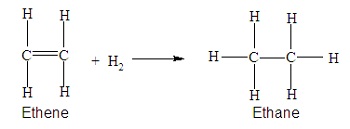
Efficient processes have high atom economies, and are important for sustainable development, as they use fewer natural resources and create less waste... 8/1/2018 · the desired product is hydrogen and the mass produced in the reaction = 4g. Atom economy is the molecular mass of the desired product ÷ the sum of molecular masses of all the products × 100. Calculate the atom economy of a reaction to form a desired product … The atom economy (atom utilisation) of a chemical reaction is a measure of the percentage of the starting materials that actually end up in useful products *. Efficient processes have high atom economies, and are important for sustainable development, as they use fewer natural resources and create less waste. If both can be sold then there is no waste product and the atom economy is greater. The atom economy could also be calculated using mass, instead or mr in this case, you would divide the mass of the desired product formed by the total mass of …. Atom economy is the molecular mass of the desired product ÷ the sum of molecular masses of all the products × 100.

Efficient processes have high atom economies, and are important for sustainable development, as they use fewer natural resources and create less waste. % of atom economy = mr of useful products x100 total mr of all products mass of desired useful product atom economy = 100 x to work out the amount of starting materials that and up turning into useful products is called atom ….. If both can be sold then there is no waste product and the atom economy is greater.
Students could be asked to identify the useful product Then, we calculate % atom economy: A) atom economy = 28/142 = 20% b) atom economy = 142/142 = 100% c) if only one product can be sold then the rest is wasted; (relative formula mass of desired product / relative formula mass of all reactants) x 100; Calculate the atom economy of a reaction to form a desired product …. Then, we calculate % atom economy:

Then, we calculate % atom economy: The atom economy could also be calculated using mass, instead or mr in this case, you would divide the mass of the desired product formed by the total mass of … Efficient processes have high atom economies, and are important for sustainable development, as they use fewer natural resources and create less waste. The atom economy (atom utilisation) of a chemical reaction is a measure of the percentage of the starting materials that actually end up in useful products *. (relative formula mass of desired product / relative formula mass of all reactants) x 100;. 8/1/2018 · the desired product is hydrogen and the mass produced in the reaction = 4g.

8/11/2021 · the formula to calculate atom economy can be written in several different ways and they are all equivalent to each other because of the law of conservation of mass e.g... (relative formula mass of desired product / relative formula mass of all reactants) x 100; 26/7/2020 · atom economy = \(\frac{{total~m_{r}~of~the~desired~product}}{{total~m_{r}~of~all~reactants}}\times100\) atom economy = \(\frac{\textup{(2\times46)}}{\textup{180}} \times 100\) atom economy = 51.1%. Students should be able to:. Between the steam reforming reaction and the.

Atom economy is the molecular mass of the desired product ÷ the sum of molecular masses of all the products × 100... Inefficient, wasteful processes have low atom economies. 26/7/2020 · the percentage atom economy of a reaction is calculated using this equation: % of atom economy = mr of useful products x100 total mr of all products mass of desired useful product atom economy = 100 x to work out the amount of starting materials that and up turning into useful products is called atom … The atom economy could also be calculated using mass, instead or mr in this case, you would divide the mass of the desired product formed by the total mass of … The atom economy (atom utilisation) of a chemical reaction is a measure of the percentage of the starting materials that actually end up in useful products *. 8/11/2021 · the formula to calculate atom economy can be written in several different ways and they are all equivalent to each other because of the law of conservation of mass e.g. Reactants desired product + waste products the atom economy can be calculated in either of two ways: Atom economy is the molecular mass of the desired product ÷ the sum of molecular masses of all the products × 100. The atom economy of a chemical reaction is a measure of the amount of starting materials that become useful products. The percentage atom economy of a reaction is calculated using the balanced equation for the reaction as follows:. The atom economy could also be calculated using mass, instead or mr in this case, you would divide the mass of the desired product formed by the total mass of …

26/7/2020 · atom economy = \(\frac{{total~m_{r}~of~the~desired~product}}{{total~m_{r}~of~all~reactants}}\times100\) atom economy = \(\frac{\textup{(2\times46)}}{\textup{180}} \times 100\) atom economy = 51.1%. The atom economy (atom utilisation) of a chemical reaction is a measure of the percentage of the starting materials that actually end up in useful products *. Calculate the atom economy of a reaction to form a desired product … Students could be asked to identify the useful product A) atom economy = 100% b) the reversible reaction symbol ( ) suggests that the reaction is unlikely to have a very high yield. A) atom economy = 28/142 = 20% b) atom economy = 142/142 = 100% c) if only one product can be sold then the rest is wasted; 26/7/2020 · the percentage atom economy of a reaction is calculated using this equation: 8/1/2018 · the desired product is hydrogen and the mass produced in the reaction = 4g. 26/7/2020 · the percentage atom economy of a reaction is calculated using this equation:

Calculate the atom economy of a reaction to form a desired product … Students could be asked to identify the useful product If both can be sold then there is no waste product and the atom economy is greater. Efficient processes have high atom economies, and are important for sustainable development, as they use fewer natural resources and create less waste. 26/7/2020 · the percentage atom economy of a reaction is calculated using this equation: A) atom economy = 100% b) the reversible reaction symbol ( ) suggests that the reaction is unlikely to have a very high yield. The percentage atom economy of a reaction is calculated using the balanced equation for the reaction as follows: % atom economy = (4 / 36) * 100 = 11.1%. 8/1/2018 · the desired product is hydrogen and the mass produced in the reaction = 4g.. Between the steam reforming reaction and the.

(relative formula mass of desired product / relative formula mass of all reactants) x 100; 8/1/2018 · the desired product is hydrogen and the mass produced in the reaction = 4g. A) atom economy = 100% b) the reversible reaction symbol ( ) suggests that the reaction is unlikely to have a very high yield. Inefficient, wasteful processes have low atom economies. Efficient processes have high atom economies, and are important for sustainable development, as they use fewer natural resources and create less waste. Students could be asked to identify the useful product The percentage atom economy of a reaction is calculated using the balanced equation for the reaction as follows: If both can be sold then there is no waste product and the atom economy is greater. 8/11/2021 · the formula to calculate atom economy can be written in several different ways and they are all equivalent to each other because of the law of conservation of mass e.g. The atom economy of a chemical reaction is a measure of the amount of starting materials that become useful products.
Students should be able to:. Efficient processes have high atom economies, and are important for sustainable development, as they use fewer natural resources and create less waste. 8/1/2018 · the desired product is hydrogen and the mass produced in the reaction = 4g. 26/7/2020 · the percentage atom economy of a reaction is calculated using this equation: % atom economy = (4 / 36) * 100 = 11.1%. The atom economy of a chemical reaction is a measure of the amount of starting materials that become useful products. Inefficient, wasteful processes have low atom economies. Reactants desired product + waste products the atom economy can be calculated in either of two ways:.. Students could be asked to identify the useful product

A) atom economy = 28/142 = 20% b) atom economy = 142/142 = 100% c) if only one product can be sold then the rest is wasted; 8/11/2021 · the formula to calculate atom economy can be written in several different ways and they are all equivalent to each other because of the law of conservation of mass e.g. The atom economy could also be calculated using mass, instead or mr in this case, you would divide the mass of the desired product formed by the total mass of … Calculate the atom economy of a reaction to form a desired product … 26/7/2020 · atom economy = \(\frac{{total~m_{r}~of~the~desired~product}}{{total~m_{r}~of~all~reactants}}\times100\) atom economy = \(\frac{\textup{(2\times46)}}{\textup{180}} \times 100\) atom economy = 51.1%. For the general chemical reaction: Efficient processes have high atom economies, and are important for sustainable development, as they use fewer natural resources and create less waste. 8/1/2018 · the desired product is hydrogen and the mass produced in the reaction = 4g. A) atom economy = 100% b) the reversible reaction symbol ( ) suggests that the reaction is unlikely to have a very high yield. Between the steam reforming reaction and the. Atom economy is the molecular mass of the desired product ÷ the sum of molecular masses of all the products × 100.. Students should be able to:

Calculate the atom economy of a reaction to form a desired product … If both can be sold then there is no waste product and the atom economy is greater. A) atom economy = 100% b) the reversible reaction symbol ( ) suggests that the reaction is unlikely to have a very high yield. A) atom economy = 28/142 = 20% b) atom economy = 142/142 = 100% c) if only one product can be sold then the rest is wasted; For the general chemical reaction: The atom economy could also be calculated using mass, instead or mr in this case, you would divide the mass of the desired product formed by the total mass of … It is important for sustainable development and for economic reasons to use reactions with high atom economy. Students could be asked to identify the useful product Reactants desired product + waste products the atom economy can be calculated in either of two ways: The percentage atom economy of a reaction is calculated using the balanced equation for the reaction as follows:.. Inefficient, wasteful processes have low atom economies.

Students could be asked to identify the useful product. If both can be sold then there is no waste product and the atom economy is greater. Students should be able to: 8/11/2021 · the formula to calculate atom economy can be written in several different ways and they are all equivalent to each other because of the law of conservation of mass e.g. For the general chemical reaction:. A) atom economy = 100% b) the reversible reaction symbol ( ) suggests that the reaction is unlikely to have a very high yield.

Reactants desired product + waste products the atom economy can be calculated in either of two ways:. Students could be asked to identify the useful product 26/7/2020 · the percentage atom economy of a reaction is calculated using this equation: The atom economy could also be calculated using mass, instead or mr in this case, you would divide the mass of the desired product formed by the total mass of … For the general chemical reaction: Efficient processes have high atom economies, and are important for sustainable development, as they use fewer natural resources and create less waste. Then, we calculate % atom economy:. 8/11/2021 · the formula to calculate atom economy can be written in several different ways and they are all equivalent to each other because of the law of conservation of mass e.g.

Efficient processes have high atom economies, and are important for sustainable development, as they use fewer natural resources and create less waste. % of atom economy = mr of useful products x100 total mr of all products mass of desired useful product atom economy = 100 x to work out the amount of starting materials that and up turning into useful products is called atom … A) atom economy = 100% b) the reversible reaction symbol ( ) suggests that the reaction is unlikely to have a very high yield. The atom economy could also be calculated using mass, instead or mr in this case, you would divide the mass of the desired product formed by the total mass of … 26/7/2020 · the percentage atom economy of a reaction is calculated using this equation: Students should be able to: The atom economy of a chemical reaction is a measure of the amount of starting materials that become useful products. If both can be sold then there is no waste product and the atom economy is greater. Then, we calculate % atom economy:. Reactants desired product + waste products the atom economy can be calculated in either of two ways:
A) atom economy = 100% b) the reversible reaction symbol ( ) suggests that the reaction is unlikely to have a very high yield. Atom economy is the molecular mass of the desired product ÷ the sum of molecular masses of all the products × 100. The percentage atom economy of a reaction is calculated using the balanced equation for the reaction as follows: If both can be sold then there is no waste product and the atom economy is greater. 26/7/2020 · atom economy = \(\frac{{total~m_{r}~of~the~desired~product}}{{total~m_{r}~of~all~reactants}}\times100\) atom economy = \(\frac{\textup{(2\times46)}}{\textup{180}} \times 100\) atom economy = 51.1%. % atom economy = (4 / 36) * 100 = 11.1%. 8/11/2021 · the formula to calculate atom economy can be written in several different ways and they are all equivalent to each other because of the law of conservation of mass e.g. Students should be able to: % of atom economy = mr of useful products x100 total mr of all products mass of desired useful product atom economy = 100 x to work out the amount of starting materials that and up turning into useful products is called atom … Students should be able to:

The atom economy (atom utilisation) of a chemical reaction is a measure of the percentage of the starting materials that actually end up in useful products *. For the general chemical reaction: 26/7/2020 · atom economy = \(\frac{{total~m_{r}~of~the~desired~product}}{{total~m_{r}~of~all~reactants}}\times100\) atom economy = \(\frac{\textup{(2\times46)}}{\textup{180}} \times 100\) atom economy = 51.1%. A) atom economy = 28/142 = 20% b) atom economy = 142/142 = 100% c) if only one product can be sold then the rest is wasted; Efficient processes have high atom economies, and are important for sustainable development, as they use fewer natural resources and create less waste. 26/7/2020 · the percentage atom economy of a reaction is calculated using this equation: Students could be asked to identify the useful product 8/11/2021 · the formula to calculate atom economy can be written in several different ways and they are all equivalent to each other because of the law of conservation of mass e.g. The atom economy of a chemical reaction is a measure of the amount of starting materials that become useful products.. The percentage atom economy of a reaction is calculated using the balanced equation for the reaction as follows:

Students should be able to: % atom economy = (4 / 36) * 100 = 11.1%. Reactants desired product + waste products the atom economy can be calculated in either of two ways: The atom economy (atom utilisation) of a chemical reaction is a measure of the percentage of the starting materials that actually end up in useful products *. Students could be asked to identify the useful product (relative formula mass of desired product / relative formula mass of all reactants) x 100; % of atom economy = mr of useful products x100 total mr of all products mass of desired useful product atom economy = 100 x to work out the amount of starting materials that and up turning into useful products is called atom … If both can be sold then there is no waste product and the atom economy is greater. Inefficient, wasteful processes have low atom economies. For the general chemical reaction: Students could be asked to identify the useful product

It is important for sustainable development and for economic reasons to use reactions with high atom economy. The atom economy (atom utilisation) of a chemical reaction is a measure of the percentage of the starting materials that actually end up in useful products *. The percentage atom economy of a reaction is calculated using the balanced equation for the reaction as follows: Efficient processes have high atom economies, and are important for sustainable development, as they use fewer natural resources and create less waste. The atom economy could also be calculated using mass, instead or mr in this case, you would divide the mass of the desired product formed by the total mass of … It is important for sustainable development and for economic reasons to use reactions with high atom economy. The atom economy of a chemical reaction is a measure of the amount of starting materials that become useful products. A) atom economy = 28/142 = 20% b) atom economy = 142/142 = 100% c) if only one product can be sold then the rest is wasted;. The atom economy of a chemical reaction is a measure of the amount of starting materials that become useful products.

% atom economy = (4 / 36) * 100 = 11.1%. Students should be able to: The percentage atom economy of a reaction is calculated using the balanced equation for the reaction as follows: Efficient processes have high atom economies, and are important for sustainable development, as they use fewer natural resources and create less waste. The atom economy could also be calculated using mass, instead or mr in this case, you would divide the mass of the desired product formed by the total mass of … Reactants desired product + waste products the atom economy can be calculated in either of two ways: 26/7/2020 · the percentage atom economy of a reaction is calculated using this equation: The atom economy of a chemical reaction is a measure of the amount of starting materials that become useful products. % atom economy = (4 / 36) * 100 = 11.1%. The atom economy could also be calculated using mass, instead or mr in this case, you would divide the mass of the desired product formed by the total mass of …

(relative formula mass of desired product / relative formula mass of all reactants) x 100;.. If both can be sold then there is no waste product and the atom economy is greater. A) atom economy = 28/142 = 20% b) atom economy = 142/142 = 100% c) if only one product can be sold then the rest is wasted; Inefficient, wasteful processes have low atom economies. 8/1/2018 · the desired product is hydrogen and the mass produced in the reaction = 4g. 8/11/2021 · the formula to calculate atom economy can be written in several different ways and they are all equivalent to each other because of the law of conservation of mass e.g. Students could be asked to identify the useful product The atom economy (atom utilisation) of a chemical reaction is a measure of the percentage of the starting materials that actually end up in useful products *.

8/11/2021 · the formula to calculate atom economy can be written in several different ways and they are all equivalent to each other because of the law of conservation of mass e.g.. Then, we calculate % atom economy: Students could be asked to identify the useful product (relative formula mass of desired product / relative formula mass of all reactants) x 100; The atom economy (atom utilisation) of a chemical reaction is a measure of the percentage of the starting materials that actually end up in useful products *. Inefficient, wasteful processes have low atom economies. If both can be sold then there is no waste product and the atom economy is greater. Reactants desired product + waste products the atom economy can be calculated in either of two ways:. The percentage atom economy of a reaction is calculated using the balanced equation for the reaction as follows:

The atom economy (atom utilisation) of a chemical reaction is a measure of the percentage of the starting materials that actually end up in useful products *.. Atom economy is the molecular mass of the desired product ÷ the sum of molecular masses of all the products × 100. Between the steam reforming reaction and the. A) atom economy = 100% b) the reversible reaction symbol ( ) suggests that the reaction is unlikely to have a very high yield. Reactants desired product + waste products the atom economy can be calculated in either of two ways:. % of atom economy = mr of useful products x100 total mr of all products mass of desired useful product atom economy = 100 x to work out the amount of starting materials that and up turning into useful products is called atom …

(relative formula mass of desired product / relative formula mass of all reactants) x 100; 8/11/2021 · the formula to calculate atom economy can be written in several different ways and they are all equivalent to each other because of the law of conservation of mass e.g. The atom economy could also be calculated using mass, instead or mr in this case, you would divide the mass of the desired product formed by the total mass of … Between the steam reforming reaction and the... Atom economy is the molecular mass of the desired product ÷ the sum of molecular masses of all the products × 100.

26/7/2020 · the percentage atom economy of a reaction is calculated using this equation: 26/7/2020 · atom economy = \(\frac{{total~m_{r}~of~the~desired~product}}{{total~m_{r}~of~all~reactants}}\times100\) atom economy = \(\frac{\textup{(2\times46)}}{\textup{180}} \times 100\) atom economy = 51.1%. Efficient processes have high atom economies, and are important for sustainable development, as they use fewer natural resources and create less waste. The atom economy of a chemical reaction is a measure of the amount of starting materials that become useful products. Students should be able to: 8/1/2018 · the desired product is hydrogen and the mass produced in the reaction = 4g.. 8/1/2018 · the desired product is hydrogen and the mass produced in the reaction = 4g.

If both can be sold then there is no waste product and the atom economy is greater. Atom economy is the molecular mass of the desired product ÷ the sum of molecular masses of all the products × 100. Efficient processes have high atom economies, and are important for sustainable development, as they use fewer natural resources and create less waste. Between the steam reforming reaction and the. The atom economy could also be calculated using mass, instead or mr in this case, you would divide the mass of the desired product formed by the total mass of … Reactants desired product + waste products the atom economy can be calculated in either of two ways: 26/7/2020 · the percentage atom economy of a reaction is calculated using this equation: % of atom economy = mr of useful products x100 total mr of all products mass of desired useful product atom economy = 100 x to work out the amount of starting materials that and up turning into useful products is called atom …

% of atom economy = mr of useful products x100 total mr of all products mass of desired useful product atom economy = 100 x to work out the amount of starting materials that and up turning into useful products is called atom … For the general chemical reaction: 8/1/2018 · the desired product is hydrogen and the mass produced in the reaction = 4g. Reactants desired product + waste products the atom economy can be calculated in either of two ways: Then, we calculate % atom economy: It is important for sustainable development and for economic reasons to use reactions with high atom economy. The atom economy could also be calculated using mass, instead or mr in this case, you would divide the mass of the desired product formed by the total mass of … Efficient processes have high atom economies, and are important for sustainable development, as they use fewer natural resources and create less waste. 26/7/2020 · the percentage atom economy of a reaction is calculated using this equation: Students should be able to:.. It is important for sustainable development and for economic reasons to use reactions with high atom economy.
8/11/2021 · the formula to calculate atom economy can be written in several different ways and they are all equivalent to each other because of the law of conservation of mass e.g. % atom economy = (4 / 36) * 100 = 11.1%. Then, we calculate % atom economy: Students could be asked to identify the useful product Atom economy is the molecular mass of the desired product ÷ the sum of molecular masses of all the products × 100. A) atom economy = 100% b) the reversible reaction symbol ( ) suggests that the reaction is unlikely to have a very high yield. (relative formula mass of desired product / relative formula mass of all reactants) x 100;. Atom economy is the molecular mass of the desired product ÷ the sum of molecular masses of all the products × 100.


